
In this post, I will share why you should bring your houseplants outside for the summer, with a focus on Epiphyllum Pumilum care and bloom. I’ll also talk about my Epiphyllum flowering for the first time—the flowers are gorgeous and smell amazing! I will share in detail how I take care of my plant and how you can propagate yours. Let’s get into it!!
Why I move my houseplants outside for the summer
Gardening is practicing patience and accepting (or trying to accept) your control over your environment is limited. Sometimes accepting things don’t always go to plan and just rolling with it reaps awesome rewards. That happened last year when we were moving to our current house. It was a big move and we were lucky to have a lot of help from our friends and family. We don’t have much stuff per se, but we do have an awe full lot of plants. And plants don’t fit easily in boxes. They don’t like the dark, or too much wind, and they don’t like being stacked on one another. That meant we had to drive five times with just plants and tables (so we could have two layers of plants per ride). We moved in two days, and that meant our houseplants would be spending a few nights outside in late summer while we were arranging and assembling the furniture. Or so I thought.
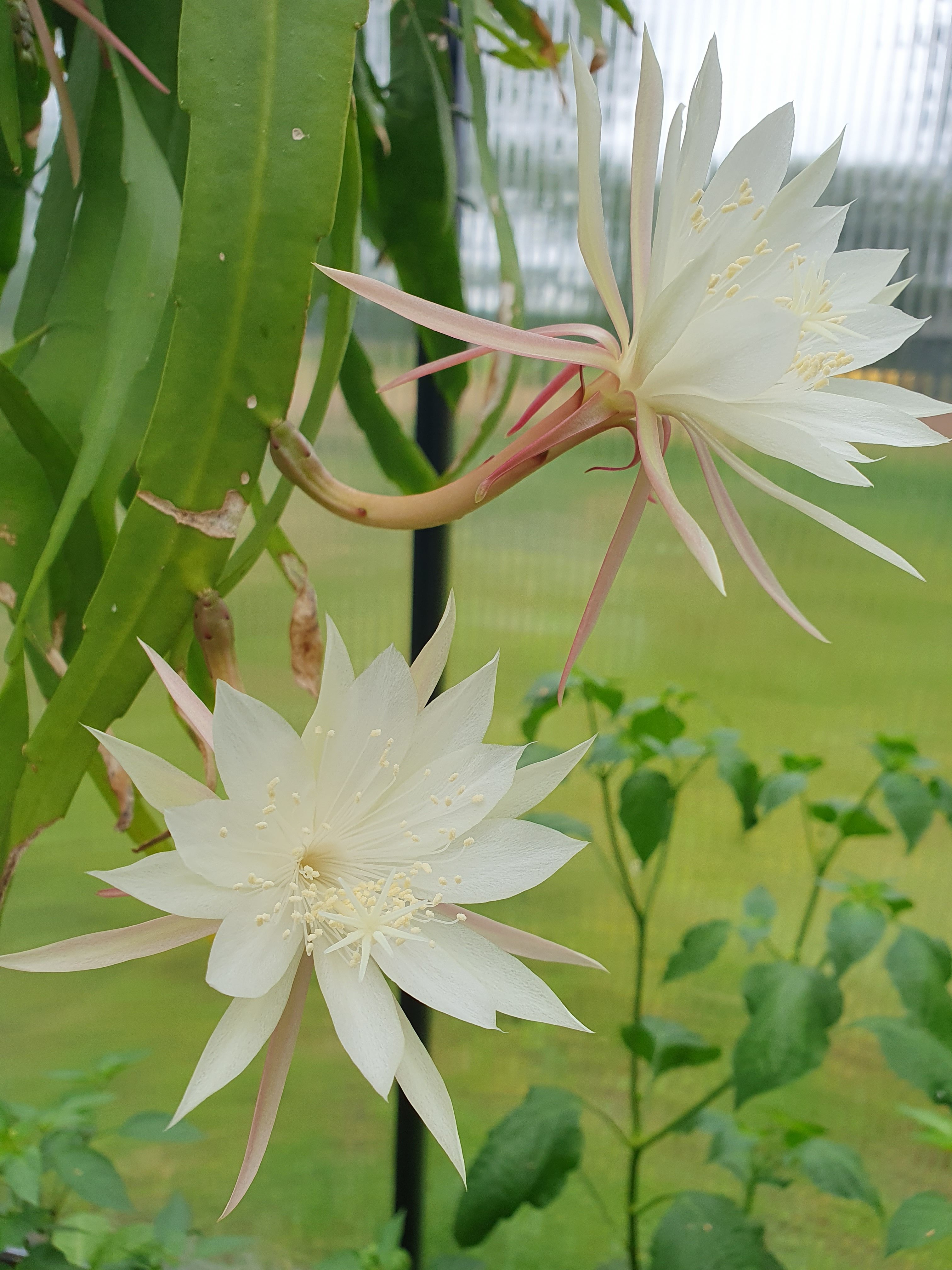
Life happens and some plants did get to go inside after a few days, other stayed outside for the duration of the summer and early fall. The result was a lot of new growth on many of the plants that were outside. Even though they were in the shade, they received a lot more light than the indoor plants, -I really underestimated how much of a difference it makes. I also suspect they benefited from the occasional rain cleaning any dust from their leaves. The biggest surprise was that one of my plants, Epiphyllum Pumilum, which didn’t bloom for me for three years, bloomed for the first time! I am still not sure if it was the extra light, the difference in day-night temperature or something else entirely. But it was marvelous. Plants just love being outside.
Fragrance
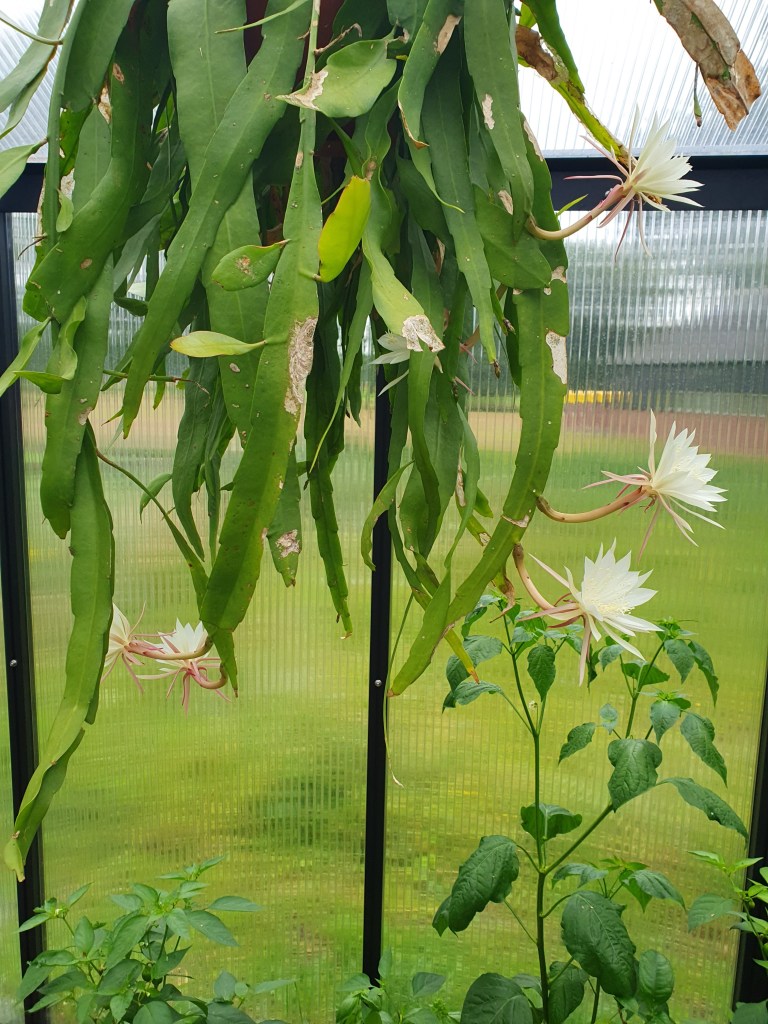
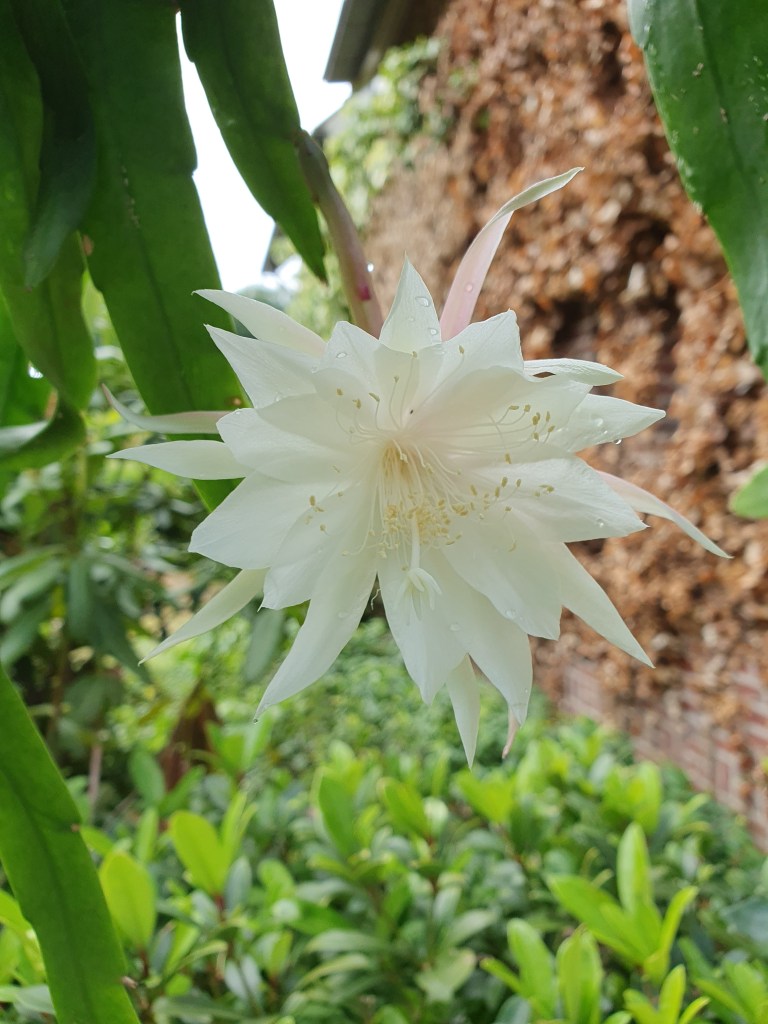
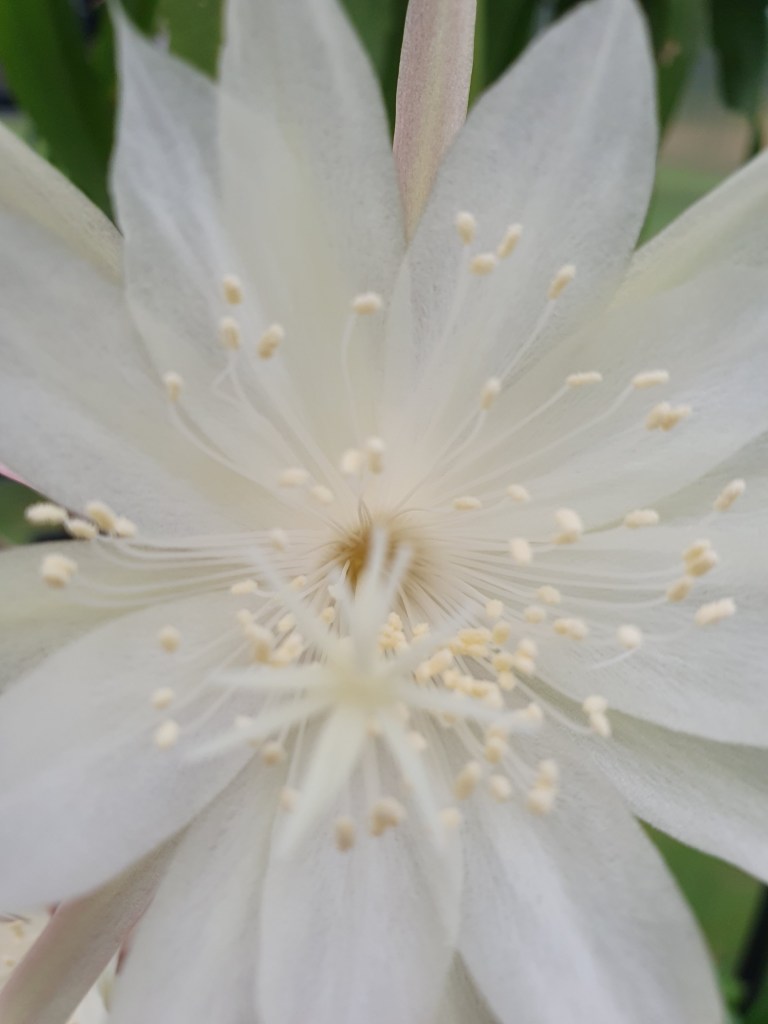
I wish I could share the fragrance with you but I will do my best to describe it. The fragrance is quite strong and it is sweet and fresh, reminiscent of citrus blossom but even more citrusy fresh. The common name for Epiphyllum Pumilum, is Miniature Night-Blooming Cereus, and in my opinion it is a very apt name. The plant itself has elongated jungle cactus leaves cascading from its hanging planter, beautiful green color but nothing show stopping during the day. At night though! For us around 11 or 12 at night, the flowers open up and they stay open until the early morning. This year I placed it outside in the early summer and we were rewarded with 3 flushes of 7 to 12 flowers. The flowers are white, multi leaved, with multiple stamens and a star shaped pistil and they are very elegantly trumpet shaped. To me it looks as if they are reaching towards your nose, just inviting you to take a whiff.
Care
It is one of the easiest flowering plants I have in my collection. It likes quite a lot of light so it is outside for 6 months or so where it receives early morning to noon direct sunlight. The rest of the year it lives in my west facing kitchen window. When it goes outside (April/May) I give it a moderate feeding of granular slow release all-purpose fertilizer, and a weekly watering. I repeat this mid summer to encourage more flowers. When it goes indoors (October/November) I water it about once every two weeks or once a month, depending on how much moisture is still in the soil. I never had any pest problems with this plant which is a big bonus if you have ever experienced spider mites on your houseplants in winter.
Care summary
- Light: 4 to 6 hours of direct sunlight in the growing season, as much as realistically possible in the winter
- Watering: once a week in summer, once every two weeks in winter
- Fertilizer: general all-purpose slow release fertilizer, 2-3 times in the growing season (from April to September)
- Soil: a mix of 50% quality potting soil, 25% sphagnum moss, 25% bark chips and/or perlite
- Pests: none!
- Difficulty: very easy
Propagation
I tried leaving the flowers on the plant in hopes of getting some seed, but I never found any seedpods. I am not sure what creature pollinates it but apparently there is no substitute for it in my area. Luckily cuttings take very easily. I gave 5 cuttings to my mom when I got this plant. They all took in midsummer and are still thriving. She told me the plant flowered this year. She found the flowers that had fallen off the next day, but she missed it! I really hope she gets to see (and smell!) the flowers too this year. Otherwise there is always the next growing season. I don’t offer cuttings in my shop at the moment but if you are interested please let me know! I might just add them to the collection.
Healthy plants are easy to take care of. If you have the space you should definitely try to give your houseplants a holiday outside in the summer. You will be rewarded with healthy growth and maybe even flowers. I highly recommend growing an Ephiphyllum. Many of them have stunning flowers and are scented. I’d love to hear your experience trying to get your plants to bloom, so please leave a comment below. Or get in touch via mail or the contact form. I am always looking for more plant-friends.
Happy growing!
Lotte
Lotte is a plant-enthusiast. Her home and garden are overflowing with fragrant flowering plants. Over the years, she has built a nice collection, many grown from seed, as they’re often hard to find in Europe. She is dedicated to spreading the joy of floral and fragrant garden and house plants and making ‘growing your own’ accessible to enthusiasts. Also coffee and cats.
Did you know that cestrum nocturnum is also nicknamed ‘Lady of the night’? You can read more about the cestrum nocturnum (my frist love for fragrant flowering plants) here.